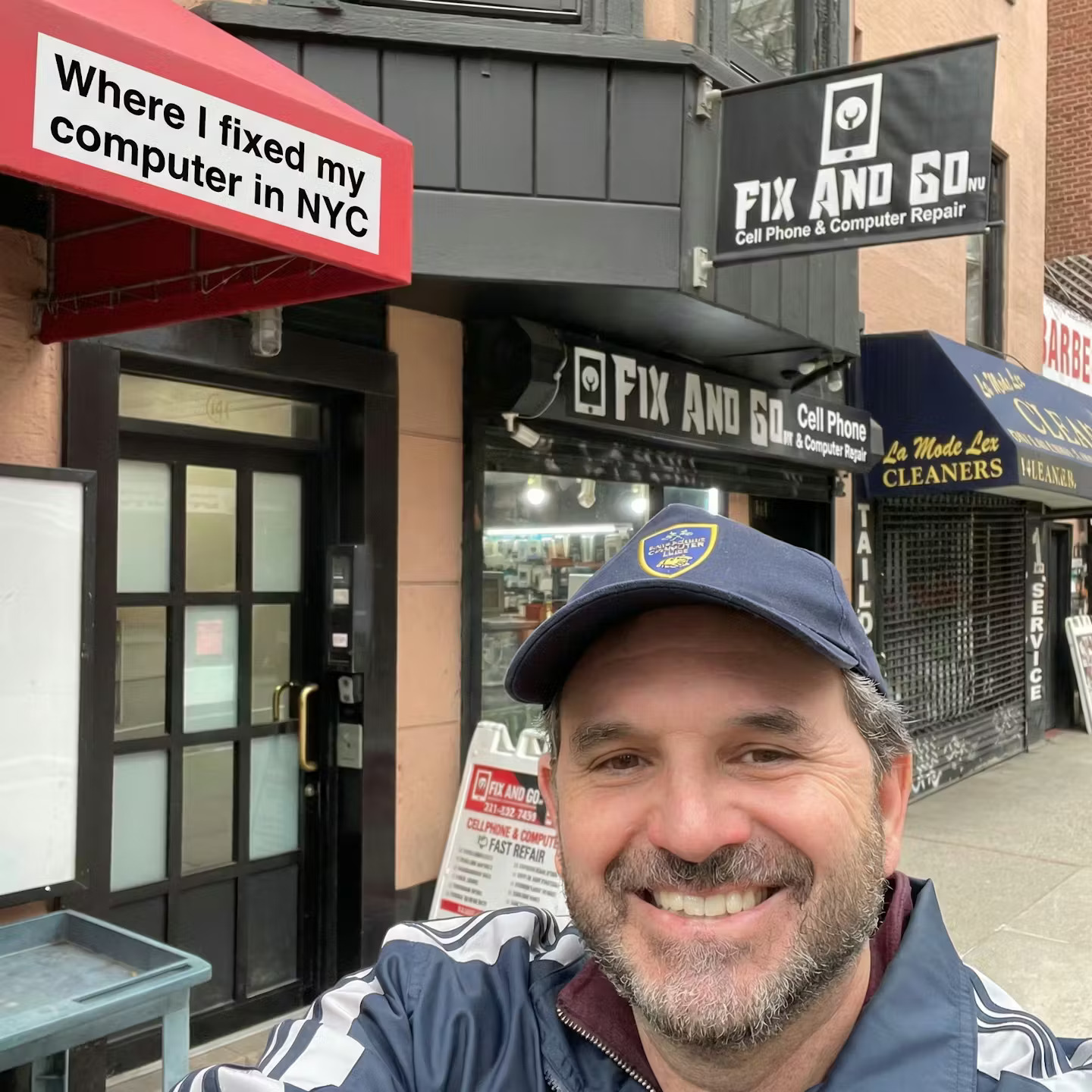
A few weeks ago, I was in New York City with a cracked MacBook screen and a problem that needed a quick solution. The Apple Store quoted me roughly $600 and a multi-day turnaround to fix the screen. I thought I could do better.
So, I did what more and more people are doing today—I asked ChatGPT.
Within seconds, it recommended several highly rated computer repair shops nearby. One stood out: a business called “Fix And Go.” It had a 4.9 rating on both Google and Yelp with a lot of reviews and consistent praise for speed and service. As a result, I made the decision to travel about three miles across Manhattan—roughly 30 minutes in NYC terms— knowing that I was bypassing numerous closer options along the way.
The result? My screen was repaired in less than 24 hours for $350. The service was excellent, and I left them a 5-star review. That experience stuck with me, and I wanted to share the further thoughts and research that I did about this situation.
I chose a business based almost entirely on its online reviews. And if this 57 year old, Gen Xer, sometimes thinks this way, you know all the younger generations are always thinking this way.
The New Front Door for Retail
For many independent businesses such as computer repair shops, restaurants, tutoring centers, and salons, their online presence is their storefront.
Platforms like Google, Yelp, and TripAdvisor (for restaurants in particular) have become the first stop for consumers. Increasingly, AI platforms like ChatGPT, Perplexity, and Gemini are aggregating and interpreting that same data to guide decisions. My research indicated that unfortunately each of these AI platforms has different algorithms. For example, Google’s Gemini relies much more on Google reviews while Perplexity relies much more on Yelp.
Regardless, here is what matters most:
- High ratings (typically 4.5+ stars)
- A large volume of reviews
- Consistency across platforms and frequency of reviews
- Recent activity and engagement
Our retailers’ customers are no longer making decisions based on proximity or co-tenancy. They are making decisions based on confidence and this confidence is frequently built online.
What This Means for Shopping Center Owners
Here is the uncomfortable question:
Do you know your tenants’ online ratings?
If you are like most shopping center owners, including me until recently, the honest answer is probably no.
We underwrite tenants based on credit, use, co-tenancy, and rent. We evaluate traffic counts, demographics, and site visibility. We negotiate lease terms and build strong tenant mixes.
But many rarely look at something that may be just as important in today’s environment, which is how does the public perceive our tenants.
Perception drives traffic, traffic drives sales, and sales ultimately drive rent stability and long-term asset value.
A Tale of Two Businesses
Imagine two tenants:
- Tenant A: Great concept, great location, but a 3.6-star rating with inconsistent feedback
- Tenant B: Similar concept, but a 4.7-star rating across hundreds of reviews
Which one is more likely to attract new customers?
Which one is more likely to survive?
Which one is more likely to renew their lease?
Which one is likely to be able to pay higher rent?
Online reputation is becoming a leading indicator of tenant success.
AI Is Accelerating the Shift
The rise of AI search is only amplifying this trend. When I asked ChatGPT for a recommendation, it did not give me a random list. It surfaced businesses with strong online reputations because that is what I put into my prompt. Why would I want to look at businesses that have a poor rating. This is the future.
A Simple First Step
After this experience, I realized that I don’t know the online ratings of my tenants and I should.
An initiative I have committed to over the next month is reviewing the online ratings of the tenants in my shopping center and exploring ways to help tenants improve their digital presence.
I am going to go online and try to hire someone to work with each of my tenants towards putting a system in place that will help them have a consistent online presence with positive ratings. Of course, they must deliver a positive experience first, but it is my belief that when a retailer and their employees know that one of their objectives is to get high ratings that they will provide better customer service (or maybe I am just naïve).
If any owner reading this blog has already gone down this route and has had success in hiring a consultant to raise its tenant’s reviews, please let me know.
“Real” Real Estate vs. Digital Real Estate
As an industry, we have always focused heavily on location, visibility, access and co-tenancy. Although these factors still matter, they may not matter as much to certain businesses. In today’s environment, there is a parallel “digital real estate” that may be just as important, or more important to certain businesses. Your tenant’s online reputation may drive more traffic than your pylon sign.
Conclusion
At Progressive Real Estate Partners, we spend our time thinking about how to create successful outcomes for both property owners and tenants. This experience was a reminder that success today requires looking beyond the lease and the site plan. It requires understanding how consumers make decisions.
We care deeply about the performance of the tenants in the centers we lease to and the long-term success of the owners who lease to them. If helping tenants improve their online reputation can drive more traffic, stronger sales, and better retention, then it’s something worth paying attention to.
P.S. – Hopefully in a future blog I will be able to share my experience in hiring a consultant to help some of my tenants. Stay tuned.