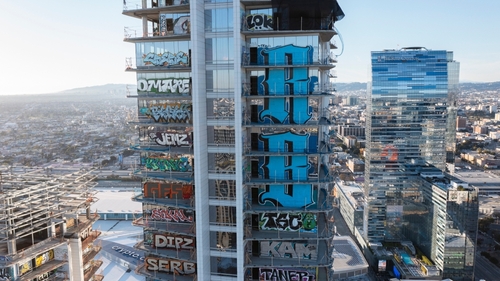
We have been noticing a clear shift in who is buying retail investment properties in the Inland Empire: more of the buyers are local. At Progressive Real Estate Partners, that started as an anecdotal observation from the properties we have sold. But it became much more interesting when Kali P. Chaudhuri of KPC Development, the buyer of the highly publicized Oceanwide Towers (aka Graffiti Towers) in downtown Los Angeles, turned out to be based in Riverside County, not Los Angeles, Orange County, or even New York. That prompted us to take a deeper look.
Using CoStar data for Inland Empire retail property sales from 2014-2016 compared with 2024-2026, we analyzed the transactions (with the help of Claude.ai’s Excel integration) to better understand where buyers of Inland Empire retail properties are coming from.
We categorized each buyer by location: Los Angeles, Orange, San Diego, Riverside, San Bernardino, Northern California, or outside California. The results show a meaningful change in the buyer pool over the past decade.
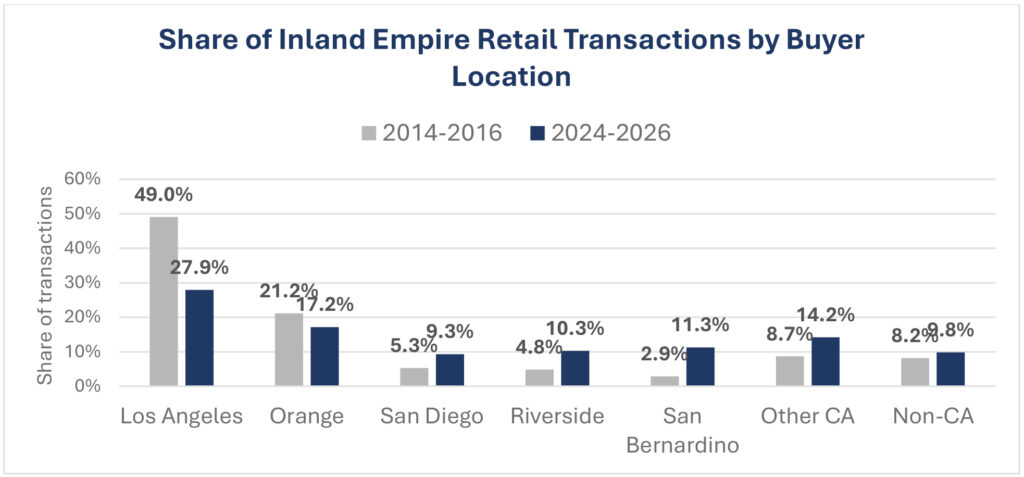
Here are the key takeaways from the data (with additional charts at the end of the blog):
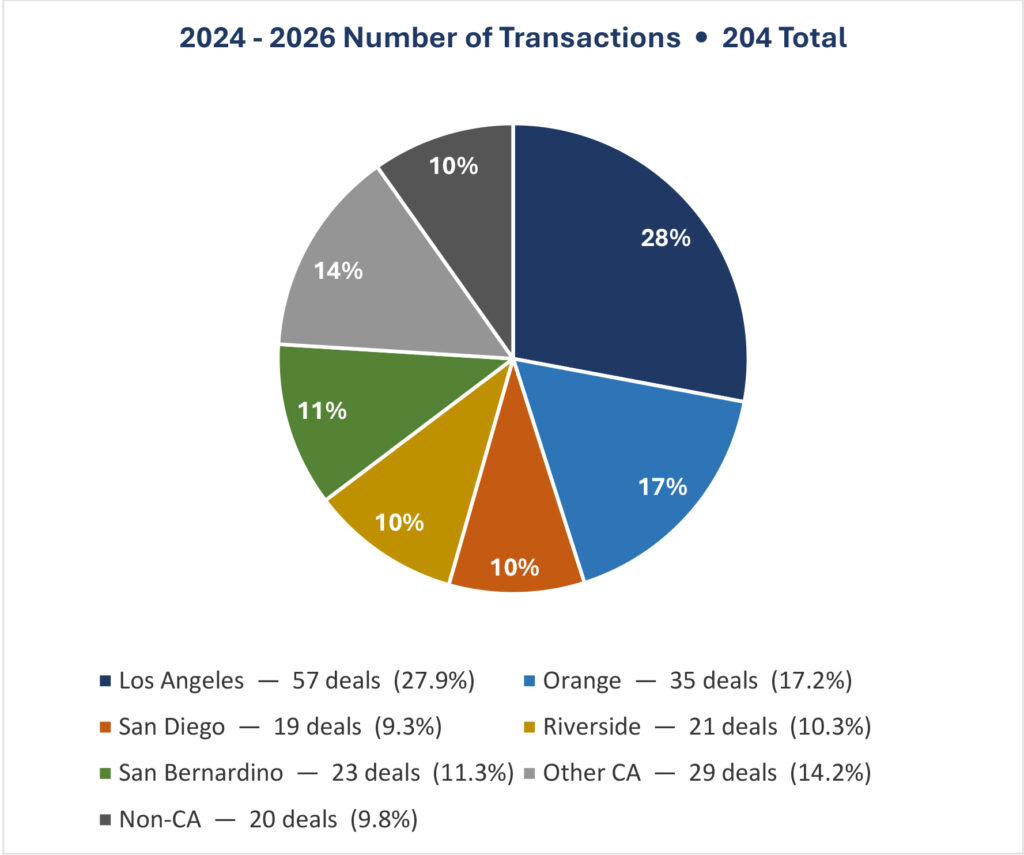
- Inland Empire buyers nearly tripled their share. Buyers from Riverside and San Bernardino counties represented only 7.7% of buyers in 2014-2016. By 2024-2026, that share had increased to 21.6% – a 280% increase! In other words, more than one out of every five buyers of an Inland Empire retail property now come from within the region. We believe this reflects growing wealth in the Inland Empire, along with more professionals and entrepreneurs choosing to live here.
- Los Angeles County’s share fell sharply. Los Angeles County-based buyers decreased from 49.0% to 27.9%. One possible explanation is that more of these investors are pursuing single-tenant properties in other parts of the country, where markets such as Texas and Florida offer a larger supply. This is just a theory. If you think you know what has happened, let us know your theory.
- San Diego buyers almost doubled their share. San Diego-based buyers increased from 5.3% to 9.3%. We believe this reflects limited investment inventory in San Diego County, as well as the growth of South Riverside County markets such as Menifee, Murrieta, Temecula, and Lake Elsinore. For San Diego investors, these markets are an accessible drive up I-15 and can offer attractive investment opportunities.
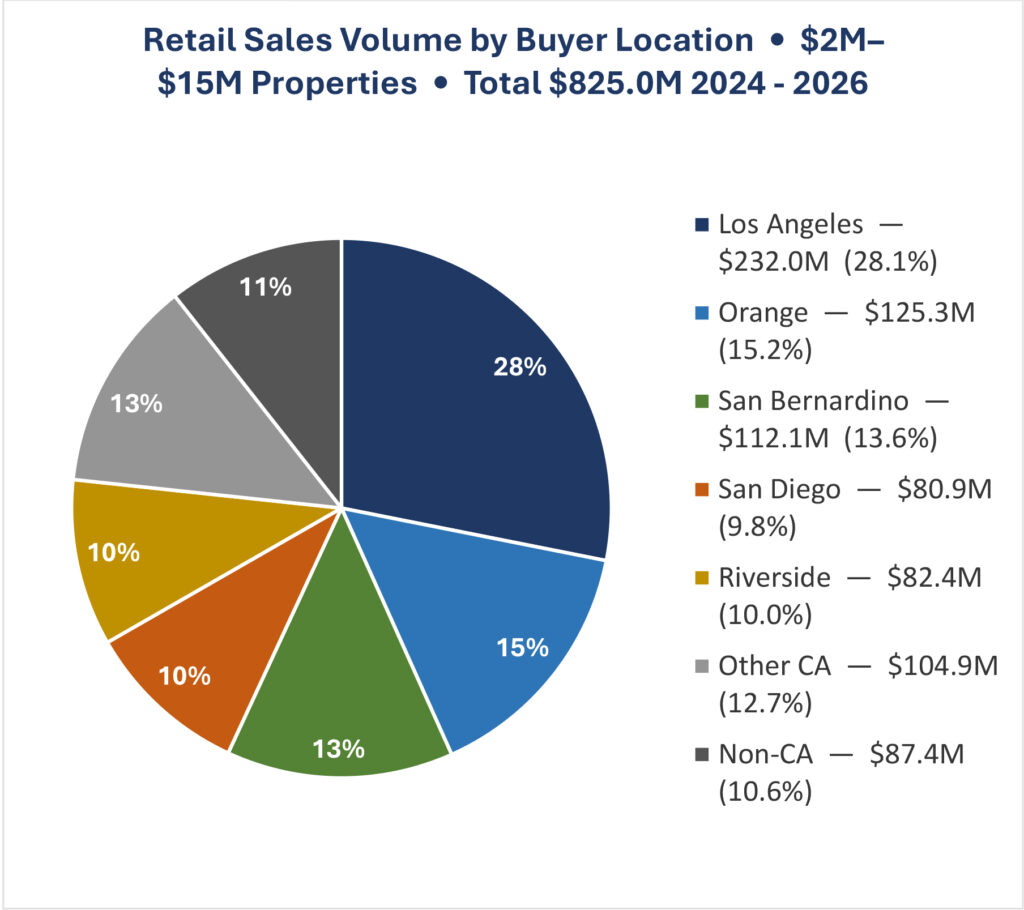
- Private out-of-state buyers remain limited. For properties priced from $2 million to $15 million, only 10.6% of sales volume came from buyers outside California. To us, this reinforces both the depth of California capital and the preference many private investors have for owning property reasonably close to home. We also regularly hear that some out-of-state investors are reluctant to buy in California because of the state’s political and regulatory environment, particularly when they can purchase properties elsewhere at equal or higher initial cap rates.
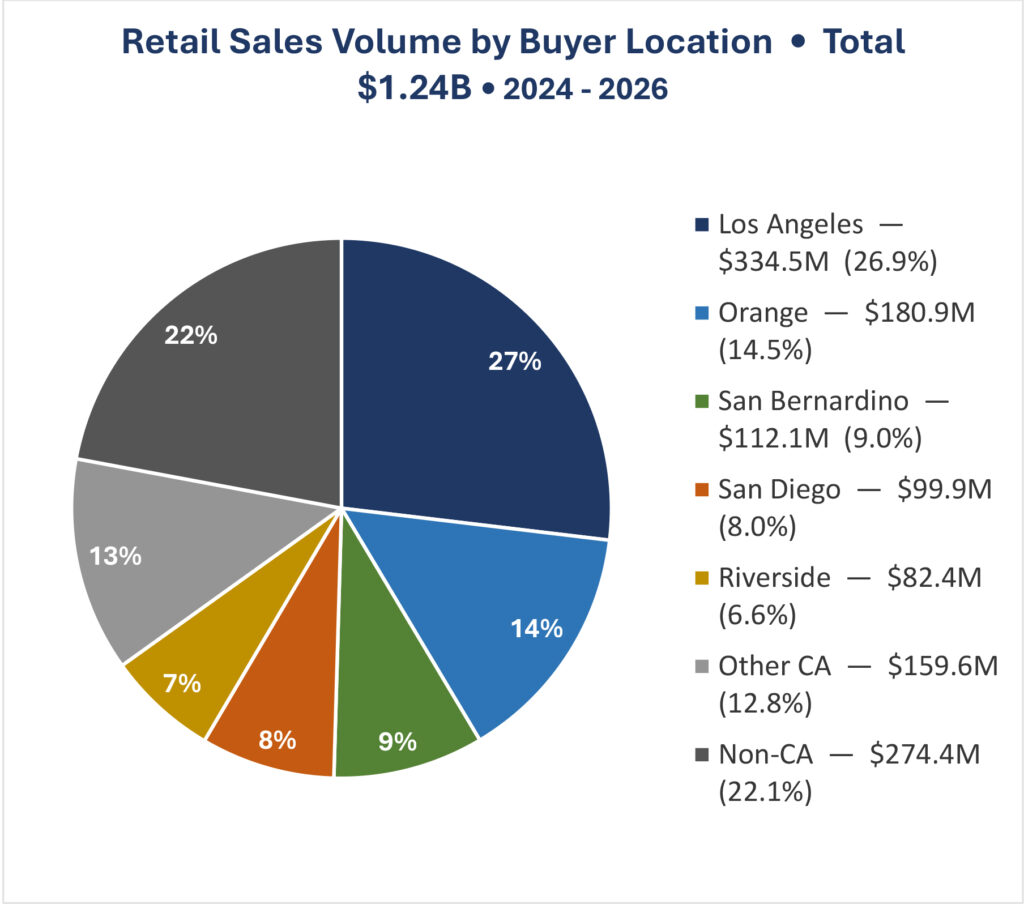
- Large transactions can skew the out-of-state numbers. When properties over $15 million are included, out-of-state buyers represented 22.1% of total sales volume. However, these institutional-level or ultra-high-net-worth transactions represented only 12 of 213 sales (5.6%). Just three out-of-state buyers accounted for $187 million of acquisitions, demonstrating how a small number of large transactions can materially affect the sales-volume percentages.
- The out-of-state buyer profile is different. Among the 9.8% of transactions purchased by parties outside California, we typically see institutional-grade shopping centers, single-tenant properties included in portfolio sales, or privately negotiated sale-leaseback transactions that often involve a public or private REIT. It is very uncommon for an individual private investor from outside California to purchase a retail property here.
- Southern California still dominates the private-investor market. For properties priced from $2 million to $15 million, 76.7% of buyers came from the five major Southern California counties. When Northern California buyers are included, that figure rises to 89.4%. The private-investor market for Inland Empire retail remains overwhelmingly California-based.
Conclusion
The biggest takeaway is that Inland Empire retail investment demand is becoming more locally rooted. The growth in Inland Empire-based buyers is a positive sign for the region: it points to a deeper pool of local capital, increased wealth creation, and greater confidence among investors who know these communities firsthand.
At Progressive Real Estate Partners, we see this shift as especially meaningful because our team is based in the Inland Empire and focuses specifically on retail real estate throughout the region. That local perspective helps us connect sellers with an increasingly diverse pool of buyers – whether they live in the Inland Empire, elsewhere in Southern California, or out of state.
If you are considering selling, buying, or completing a 1031 exchange in the Inland Empire, we enjoy collaborating with investors, and property owners to think through the market and identify the best path forward.
P.S. We wish Mr. Chaudhuri tremendous success with Oceanwide Towers!
Additional Charts